
This is the third article in our Asset Management Value Roadmap series. In the first article, we established what asset management truly means and how value should be understood. In the second, we explored ISO 55001 as a reference framework and why certification alone does not guarantee value creation. Now it is time to get practical.
In our experience working with over 350 organisations across mining, utilities, oil and gas, and infrastructure, we have seen the same patterns repeated again and again. Organisations invest significant time and money into asset management improvement programs, and yet the results fall short of expectations. Not because the intent was wrong. Not because the people involved lacked capability. But because the fundamentals were not in place.
So what does it actually take to generate real, measurable value from better asset management? In this article and the remaining articles in this series, we share six practical tips that will help you move beyond compliance and drive genuine improvement within your organisation.
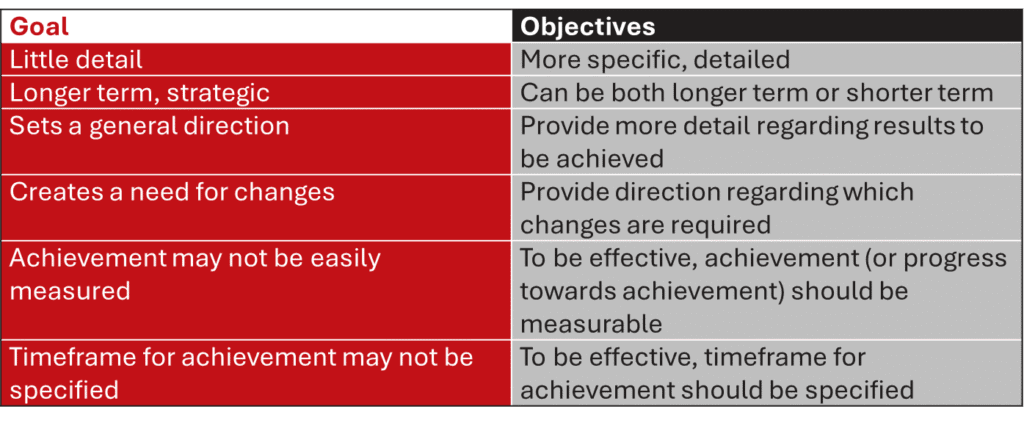
Tip 1: Be Crystal Clear About What Value Means for Your Organisation
This sounds obvious. It is not.
Ask ten people within a typical asset-intensive organisation what “value” means and you will get ten different answers. The finance team will talk about cost reductions. Operations will talk about uptime and throughput. The maintenance team will talk about equipment reliability. Senior leadership might talk about shareholder returns or regulatory compliance. All of them are right. And that is exactly the problem.
If your organisation does not have a shared and specific understanding of what value means in your context, then coordinating activity to realise it becomes almost impossible. People end up pulling in different directions, optimising for their own function’s definition of value while inadvertently undermining the broader organisational objectives.
Tip 2: Recognise That Asset Management Involves Almost Everyone in Your Organisation
One of the most persistent misconceptions about asset management is that it belongs to one department. In many organisations, “asset management” is a function, a team, a job title. And while having dedicated asset management expertise is valuable, the idea that asset management can be confined to a single function is fundamentally at odds with what asset management actually is.
Recall the definition from ISO 55000:2024: asset management is the coordinated activity of an organisation to realise value from assets. The key word is “coordinated.” Coordination, by definition, involves multiple parties.
To understand just how broad this coordination challenge is, it is worth considering the scope of asset management as defined by the Global Forum on Maintenance and Asset Management (GFMAM) in its Asset Management Landscape. The Landscape defines 40 distinct subjects across 7 broad areas. And when you consider which parts of the organisation are involved in performing activities in each of those subjects, you quickly realise that the scope of Asset Management embraces almost all functions within the organisation.
Consider the following:
Context and Stakeholders includes subjects like asset costing and valuation, which typically falls within the finance or commercial function. It also includes stakeholder engagement, which in many organisations involves communications, government relations, and executive leadership.
Governance includes asset management assurance and audit, which often involves the internal audit function. It includes technical standards and legislation, which spans both engineering and legal or compliance teams. And it includes risk management, which in most large organisations is a dedicated function in its own right.
Asset Management Planning includes demand analysis, which requires input from business development, sales, and marketing to forecast future demand for the products or services that assets produce. It includes resourcing strategy and management, which involves procurement and contracts whenever decisions about in-house versus outsourced activity are being made.
Leadership and People covers asset management leadership, organisational arrangements, culture, and competence management. In most organisations, these subjects sit squarely within the remit of human resources.
Tip 3: Align Every Decision With Organisational Objectives
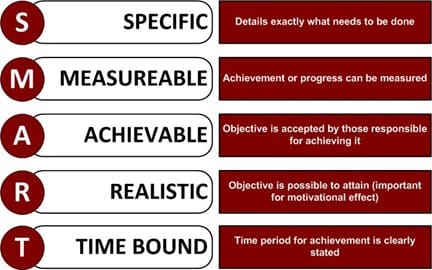
Having clear SMART objectives is essential. But objectives only create value when they are consistently used to guide decision making at every level of the organisation, from the boardroom to the shop floor.
In asset-intensive organisations, thousands of decisions are made every day that collectively determine how well assets perform and how much value they deliver. Many of those decisions are made by frontline workers, supervisors, and middle managers who may have little visibility of the organisation’s broader objectives. And yet their decisions, cumulatively, have an enormous impact on outcomes.
The challenge is to create alignment between the organisation’s strategic objectives and the day-to-day decisions that are made across the business. This means ensuring that the people making those decisions understand what the organisation is trying to achieve, have the information they need to make good decisions, and are working within a framework that channels their efforts toward the right outcomes.
This is not about micromanagement. It is about creating a clear line of sight from organisational objectives to individual decisions. When a maintenance planner is deciding whether to schedule a particular inspection task, they should be able to connect that decision to the organisation’s reliability objectives. When a procurement manager is choosing between two suppliers, they should be able to connect that decision to the organisation’s cost and risk objectives.
Tip 4: Focus on Changing Behaviours, Not Just Generating Documents
This is perhaps the most important tip for organisations pursuing ISO 55001 certification or alignment, and it is one of the most commonly overlooked.
ISO 55001 contains a significant number of documentation requirements. It requires organisations to develop and maintain asset management policies, strategic asset management plans, asset management plans, and a range of other documented information. And so it is natural, when working through the requirements of the standard, to focus heavily on producing these documents.
The problem is that documents do not create value. Behaviours create value.
A beautifully written asset management policy that sits in a folder on a shared drive and is never read by anyone has zero impact on the performance of your assets. An asset management plan that is produced to satisfy a certification requirement but is not actually used to guide maintenance and operational decisions is a waste of effort.
The documents that ISO 55001 requires are valuable, but only insofar as they change the way people think and act. Every document should exist to support a behaviour change. Before producing any piece of documentation, the question to ask is: what behaviour change is this document intended to drive, and how will we ensure that it actually drives that change?
Tip 5: Recognise That Changing Behaviours Requires Changing Culture
Tip 4 leads directly to Tip 5. If asset management improvement is fundamentally about changing behaviours, then it is also fundamentally about changing culture. Because culture, at its core, is the sum of the behaviours that are considered normal and acceptable within an organisation.
Changing business processes is relatively straightforward. You document a new process, train people on it, and monitor compliance. Changing culture is much harder, because culture is not driven by processes or documents. An organisation’s culture reflects the shared values, beliefs and attitudes of those that work within it.
Improving asset management in a meaningful and sustainable way requires organisations to think carefully about their culture, what needs to change, and then implement targeted interventions to drive changes in attitudes and behaviours. This is a significant undertaking, and it is not something that can be achieved quickly.
Tip 6: Commit to the Long Term
Which brings us to the final tip. Changing an organisation’s culture (and therefore obtaining true value from Asset Management) is not a six-month project. It is not a twelve-month project. In most organisations, meaningful cultural change takes three to five years at a minimum, and sustaining that change requires ongoing commitment from senior leadership well beyond that.
This has important implications for how asset management improvement programs are structured and resourced. Programs that are set up as short-term initiatives with finite funding and a defined end date will typically achieve some process improvements, but they will not achieve the deeper cultural change needed to sustain those improvements over time.
What is required instead is a long-term, leadership-driven commitment to asset management excellence. Senior leaders need to model the behaviours they expect from their teams. They need to consistently reinforce the importance of asset management objectives through their decisions and communications. And they need to maintain that consistency of purpose even when short-term pressures create temptation to cut corners or defer investment.
The organisations that get the most out of asset management are those where leadership treats it not as a project to be completed, but as a core business discipline to be continuously developed and improved over time.
Where to From Here
These six tips provide the foundation for a more deliberate and value-focused approach to asset management improvement. In the remaining articles in this series, we will explore each of these tips in more depth, providing practical guidance and real-world examples to help you apply them within your own organisation.
The journey to asset management excellence is not a short one. But with clear objectives, broad organisational engagement, aligned decision making, a focus on behaviour change, cultural commitment, and long-term leadership support, it is absolutely achievable.
In the next article in this series, we take a deeper look at how to develop truly effective asset management objectives and explore what SMART objective setting looks like in practice across different industry sectors.
This article is part of the Asset Management Value Roadmap series by Assetivity. To read the previous articles in this series, visit:
Article 1: Understanding Asset Management: The Foundation for Value Creation
Article 2: ISO 55000 and ISO 55001: Understanding the Standards and Their Limitations